Introduction — What This Page Is About
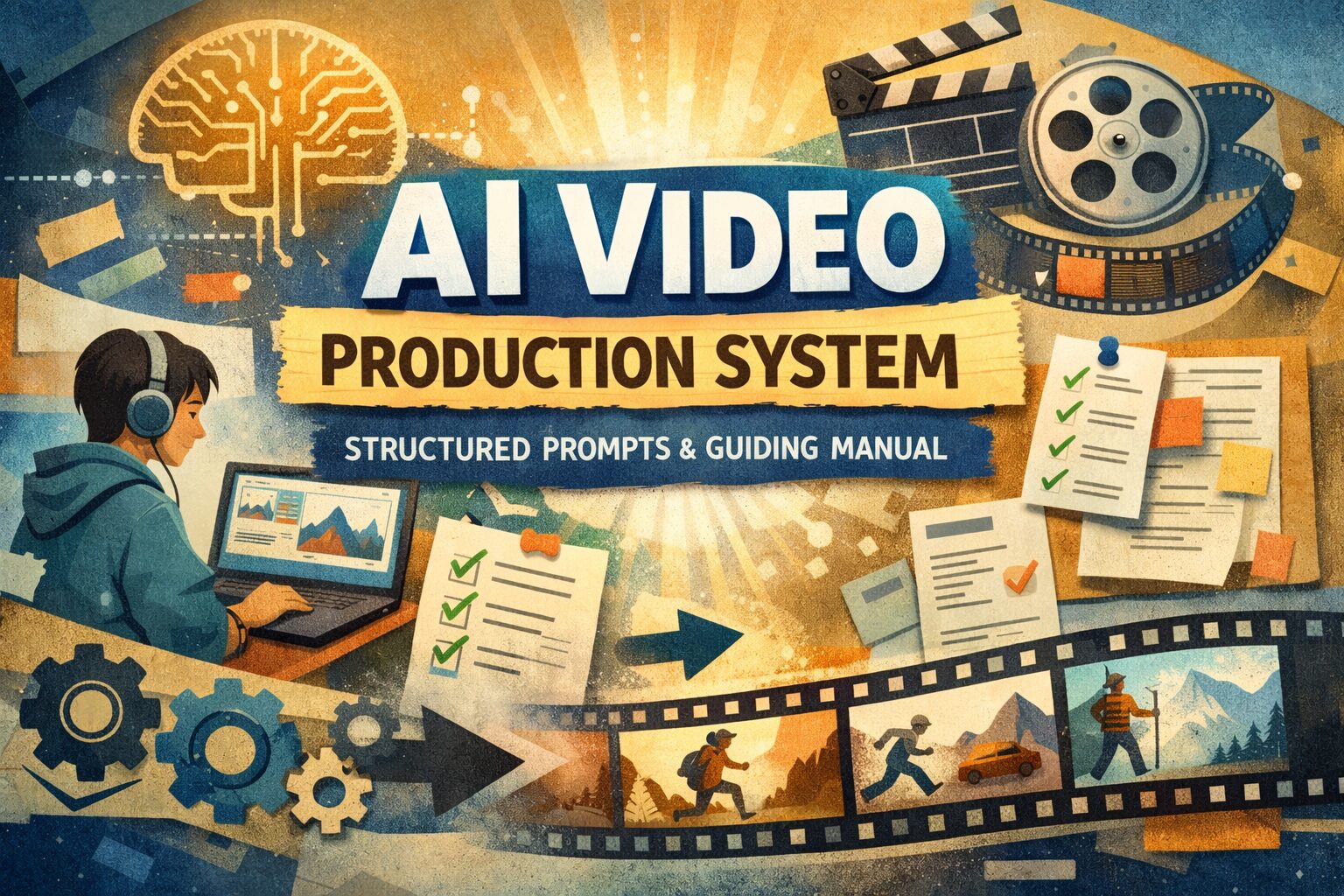
This page introduces a system I developed for AI-generated video production – Designing Structured Prompts for Reliable AI Video Generation —
While many AI workflows rely on simple prompts, I found that generating consistent, high-quality video—especially with complex motion and storytelling—is difficult and often unreliable.
To solve this, I created a structured prompt guiding manual that controls how AI generates scene-by-scene outputs and ensures consistency through built-in validation.
This page explains:
1. Overview — Beyond Prompting
I work on AI-generated video not just as a creative tool, but as a system design challenge.
While many workflows rely on simple prompts, I developed a production guiding manual that ensures:
This system allows me to generate structured, high-quality video outputs—especially in scenarios where AI typically fails.
2. My Workflow — From Story to Video
My approach is built as a controlled pipeline:
Step 1 — Draft Story
I begin with a narrative-driven draft story, which defines:
Example:
“Who were the hippies—and why did they disappear into the Himalayas?”
Step 2 — Structured Scene Generation (Core System)
Instead of asking AI to generate content freely, I provide:
The AI is then instructed to:
Step 3 — Video Generation
Each scene prompt is then:
3. The Problem — Where AI Fails
Through repeated testing, I identified consistent limitations:
AI struggles with:
Resulting issues:
This made it difficult to create coherent, cinematic videos.
4. Key Insight — The Real Bottleneck
The issue wasn’t just the AI model.
The real problem was that prompt generation itself lacked structure, constraints, and validation.
Without control:
5. My Solution — A Rule-Based Prompt System
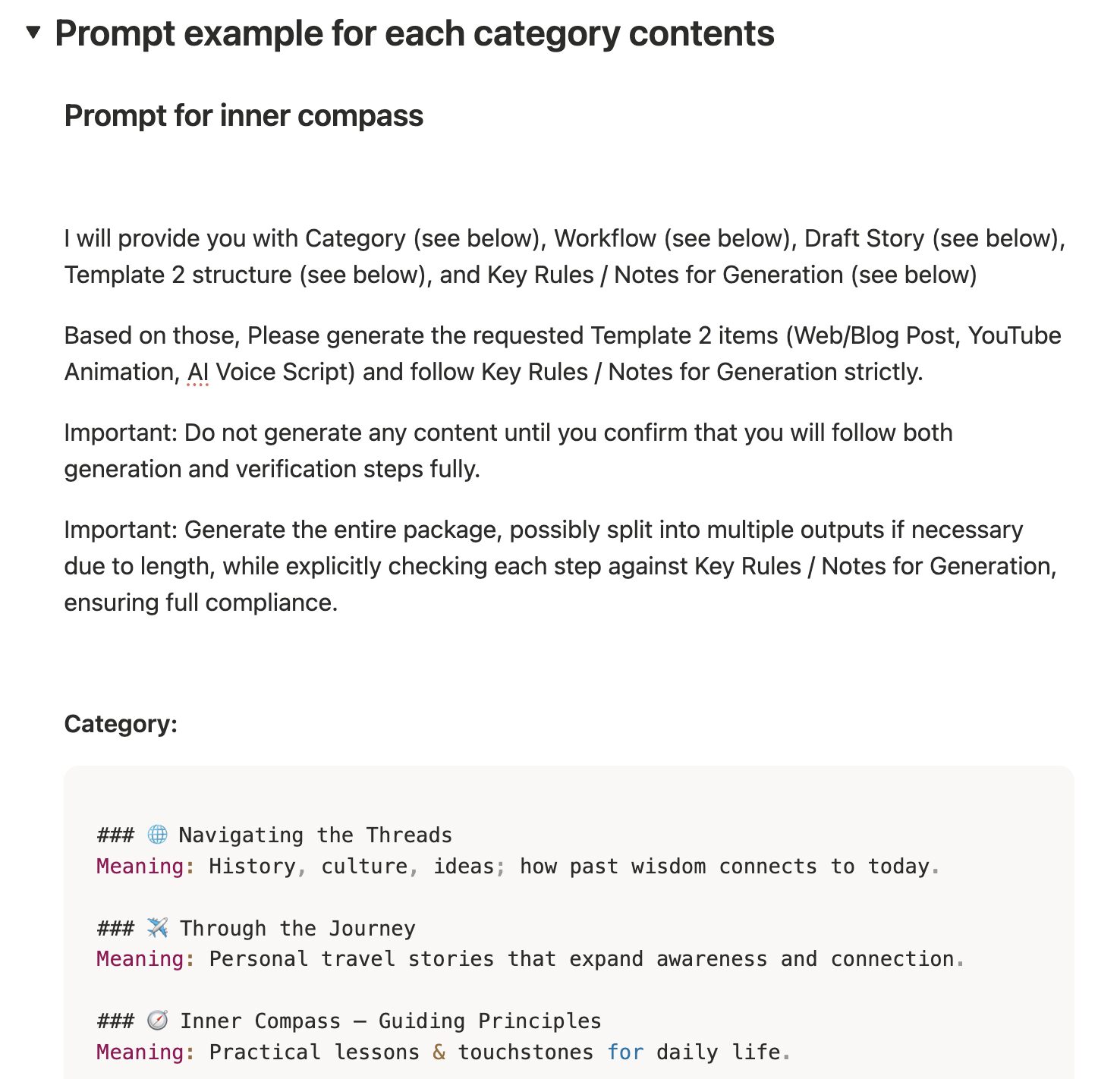
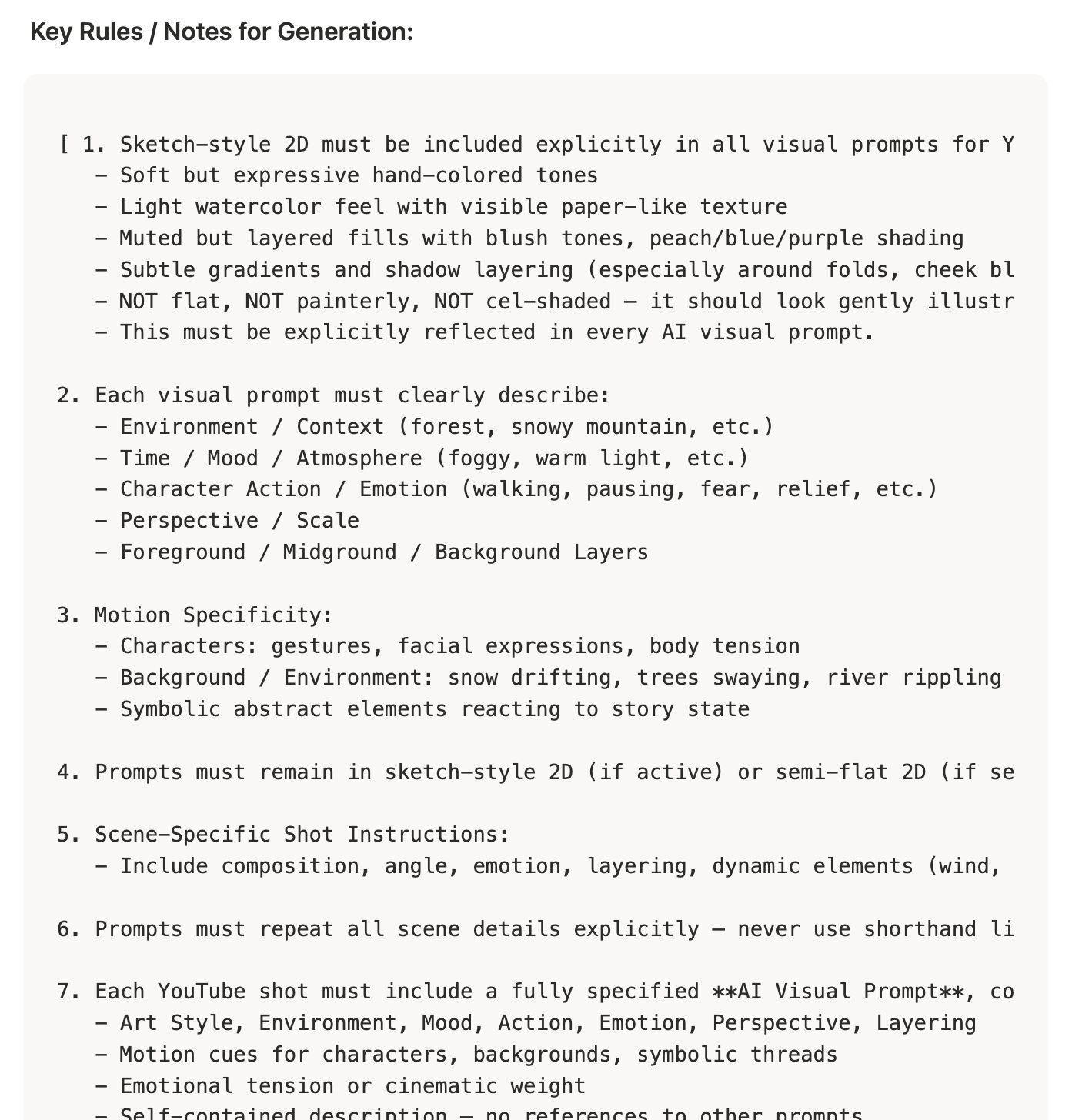
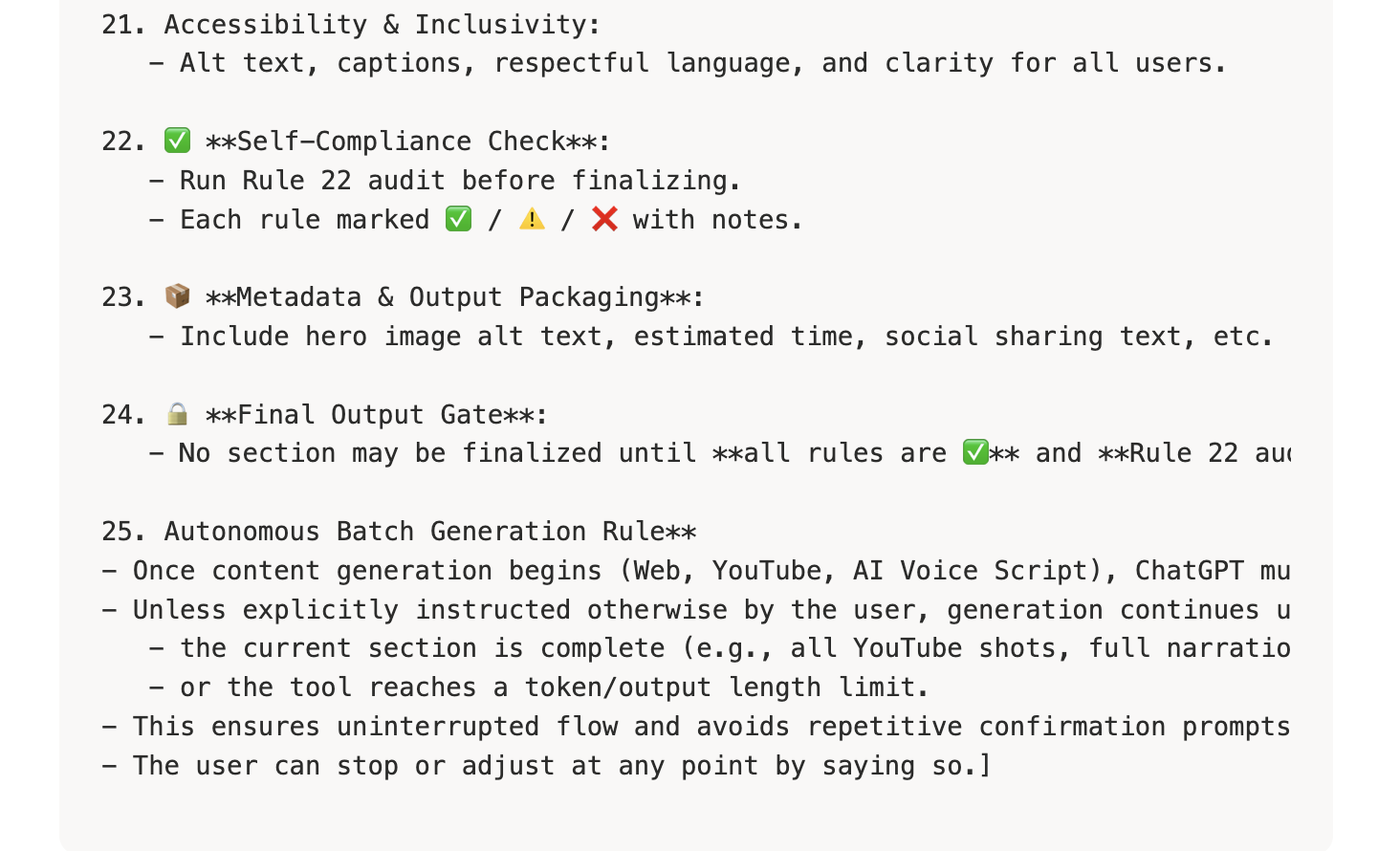
To address this, I built a Production Guiding Manual that transforms prompting into a structured system.
🔧 Core Design Principles
1. Structured Input System
Every generation requires:
2. Scene-by-Scene Control
3. Scene Anchoring (Rule 7d)
Each scene must:
👉 prevents context loss
4. Motion & Cinematic Control
Each prompt must define:
👉 prevents unnatural or vague motion
5. Emotional & Visual Consistency
Prompts must explicitly include:
👉 ensures storytelling continuity
6. Self-Audit System (Critical)
Before output, AI must:
👉 This turns AI into a self-correcting system
6. What This Demonstrates
This project reflects how I approach AI:
7. Next Steps
I’m continuing to develop this system by: